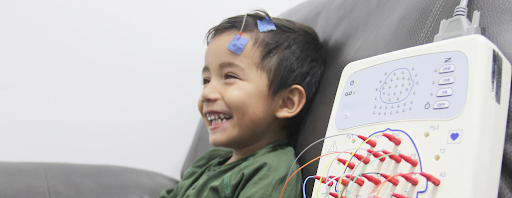
If you have ever looked into neurofeedback, you may have heard of QEEG brain mapping. If you look up QEEG brain-mapping online, you may see images of people wearing strange devices on their heads with wires sticking out of it. You may also be treated to hundreds of colorful images that look a lot like topographic maps with red or green or blue areas on head graphics. As a neurofeedback specialist and QEEG technologist, I have spent hundreds of hours looking at similar images. While I find them fascinating, it can be overwhelming for clients or parents trying to figure out what they mean and what to do next. So, what does a QEEG actually tell us and why should you consider getting one?
What is a QEEG?
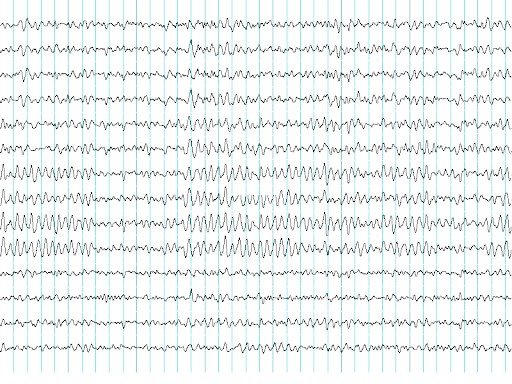
You may have heard of an EEG before. Similar to an EKG for heart activity, an EEG measures electrical activity coming from the brain. An EEG is a non-invasive procedure that involves placing electrodes on the scalp using a special kind of paste or gel. EEG electrodes are very sensitive and can pick up the tiny electrical signals coming from your brain. The EEG signals coming from our brains are typically very small, measured in microvolts (millionths of a volt), so the EEG electrodes send the signal through a special kind of amplifier. Similar to how musicians use amplifiers to make their music louder, an EEG amplifier can make your brain waves “louder” so we can see them. While an EEG may just look like squiggly lines, these signals can tell us a lot about how your brain is working.
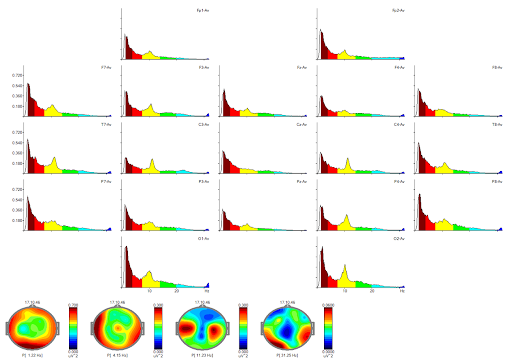
A QEEG, sometimes called a brain map, is a kind of summary report of an EEG recording. EEGs can sometimes be 10-40 minutes long, with some lasting up to several hours. EEGs can be complex and take a long time to read. A QEEG brain map breaks it down into much simpler, easy to understand images.
Why Get a QEEG?
There are many reasons to get a QEEG brain map. If you have ever had a seizure, brain injury, or seen a neurologist, you may have gotten an EEG before. However, an EEG shows so much more. Many athletes get pre-season EEGs so they can get a baseline in case they get a head injury during the season. An EEG is one of the best ways to measure changes in brain activity over time and can help us tell if the brain is developing and healing properly.
We can also see functional activity and changes that can help with pinpointing a variety of neuropsychiatric problems. If you are dealing with depression, anxiety, brain fog, insomnia, a QEEG brain map can show us what brain wave patterns are contributing to your symptoms. A QEEG brain map can also be a great prognostic tool; telling us what kind of medications or other interventions will be the best fit for your symptoms.
Getting a QEEG brain map can be the first step in understanding how your brain works and understanding how to take the best care of your brain. Reach out to our team at Mind Body Neuro to learn more about QEEG brain mapping, and start your brain health journey today.